01 Starting point
Industrial valves are not sold on product photos. Butterfly valves, globe valves and gate valves differ in nominal diameter, pressure rating, material, connection type and sealing. Buyers are looking for one specific part and have to find it again in the catalogue without any doubt.
Then there is the mechanics of the B2B business. Customer-specific terms, quantity pricing, order histories and repeat orders are routine in projects of this kind. A shop that does not draw this data from the systems of record creates duplicate maintenance and discrepancies between quote and order.
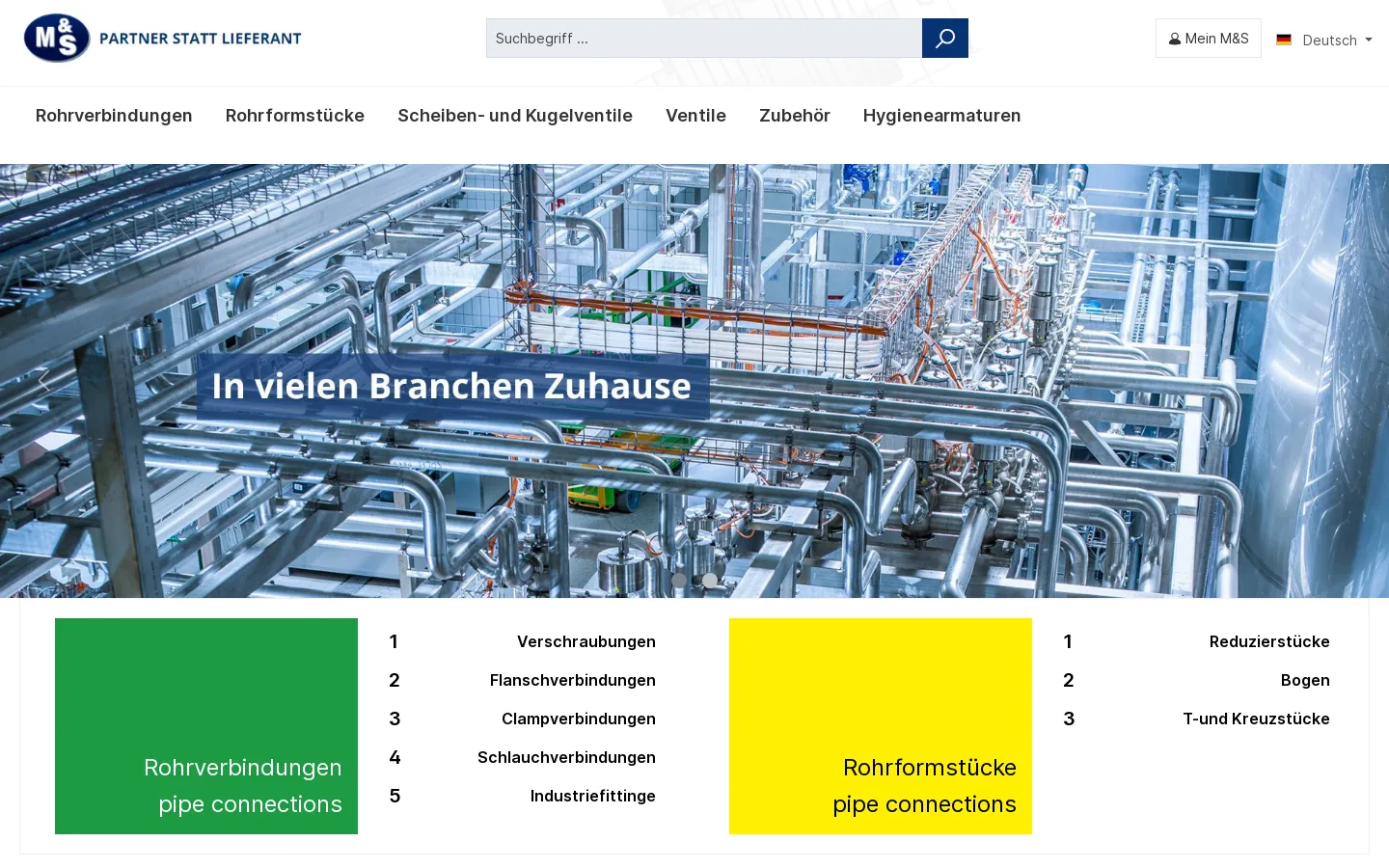
The company line is “PARTNER STATT LIEFERANT” — partner, not supplier. For the shop that means it does not replace technical advice. It takes the recurring procurement work off the sales team, so there is time left for the actual engineering questions.
02 Solution
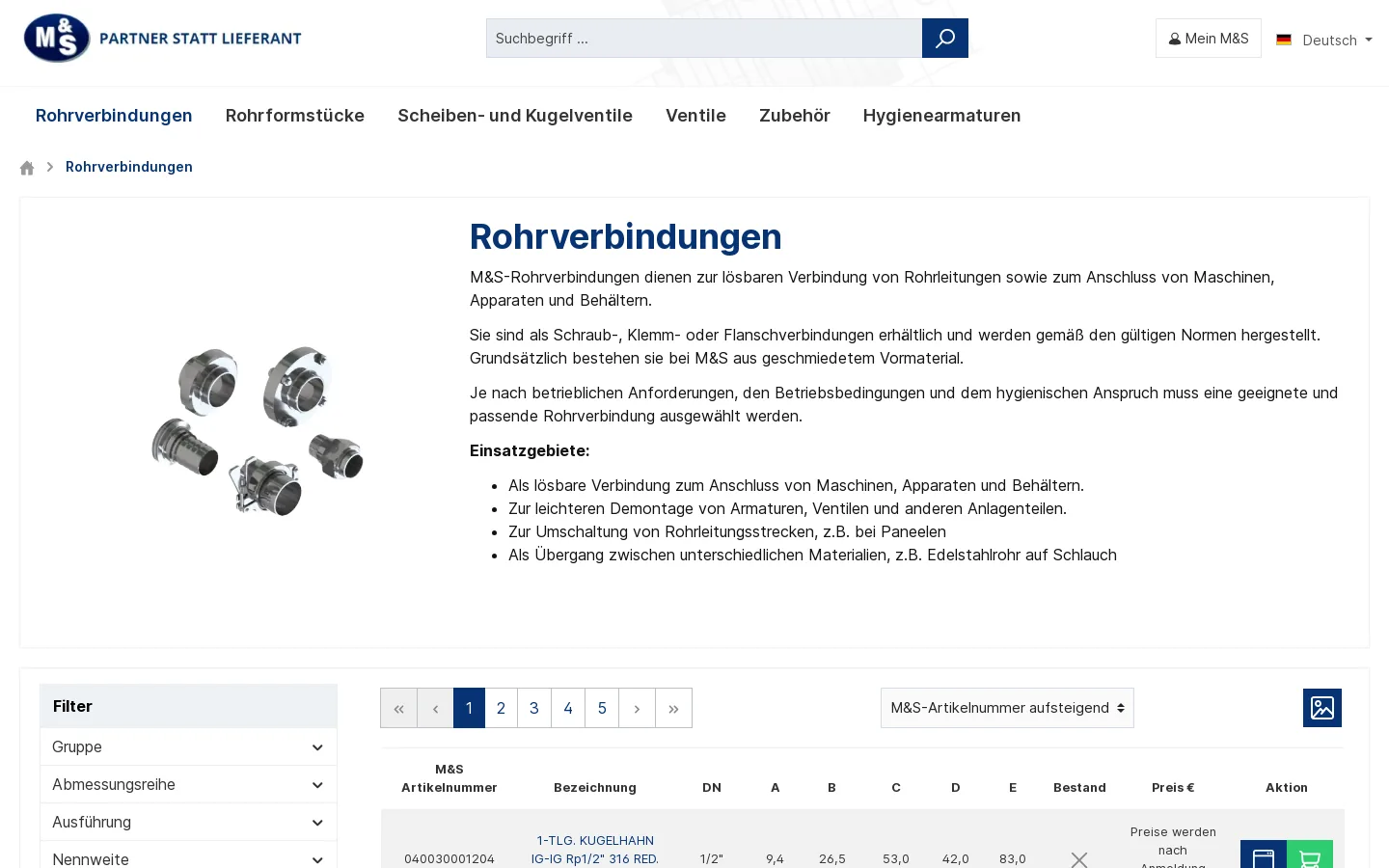
The basis is Shopware 6. The catalogue structure follows the technical characteristics of the range: properties such as nominal diameter, pressure rating and material are modelled as filterable attributes, not as running text in the product description. Search runs against an index that also matches part numbers and short designations cleanly.
Interfaces move item master data, prices and availability from the systems of record into the shop, and orders back the other way. The imports are built as repeatable jobs on PHP 8 and log every run, so an aborted sync can start again without damaging data.
Operation and hosting run on our own servers in Germany. Docker containers, MariaDB and Redis make up the runtime environment; Shopware and PHP updates go in through a staging and a production environment. Planning, build and operation from one team.
03 Result
The catalogue shows the same data as the back office. Prices and availability do not have to be maintained twice, and orders arrive structured in the system of record instead of as an email in an inbox.
For buyers the effort shifts: recurring items go through the shop, enquiries that need engineering input still go to sales. The shop stays open to ongoing development because development and operation are not split apart.