Why CRM projects fail
The software is rarely the problem. CRM projects fall over on duplicate records, on mandatory fields nobody fills in, and on processes that exist only on slides. Four weeks in, sales is back in Excel, because the new system asks more than it answers.
So we do not start with a product demo, we start with your workflows. Who creates a customer record, who qualifies leads, who is accountable for data quality — only once that is settled is it worth looking at software. A CRM reflects processes. It does not repair them.
Selection without a vendor’s lens
We do not sell licences and we have no vendor behind us. As a digital agency in Oldenburg we live on projects, not on commission. Our recommendation follows your requirements: sales process, team size, existing systems, budget. Often the lean system is the better choice than the large suite whose modules sit untouched for three years.
If no standard system fits — because your industry needs its own data objects, pricing logic or approval paths — we build the CRM ourselves on PHP 8 and Symfony. That is not a fallback. In some situations it is simply the more economical decision.
Integration with website, shop and ERP
A CRM without connections is just another island. The value appears when enquiries from website forms, orders from the shop and master data from the ERP come together automatically. Your sales team then sees not a contact but a history: quotes, orders, tickets, revenue. That is how customer data gets centralised instead of copied.
What matters is data ownership: which system holds the truth for which field. We settle that field by field before the first interface runs — otherwise you synchronise errors in both directions. Technically we work with the APIs of the systems involved, with middleware in between where it is needed.
CCM2: our own lead management system
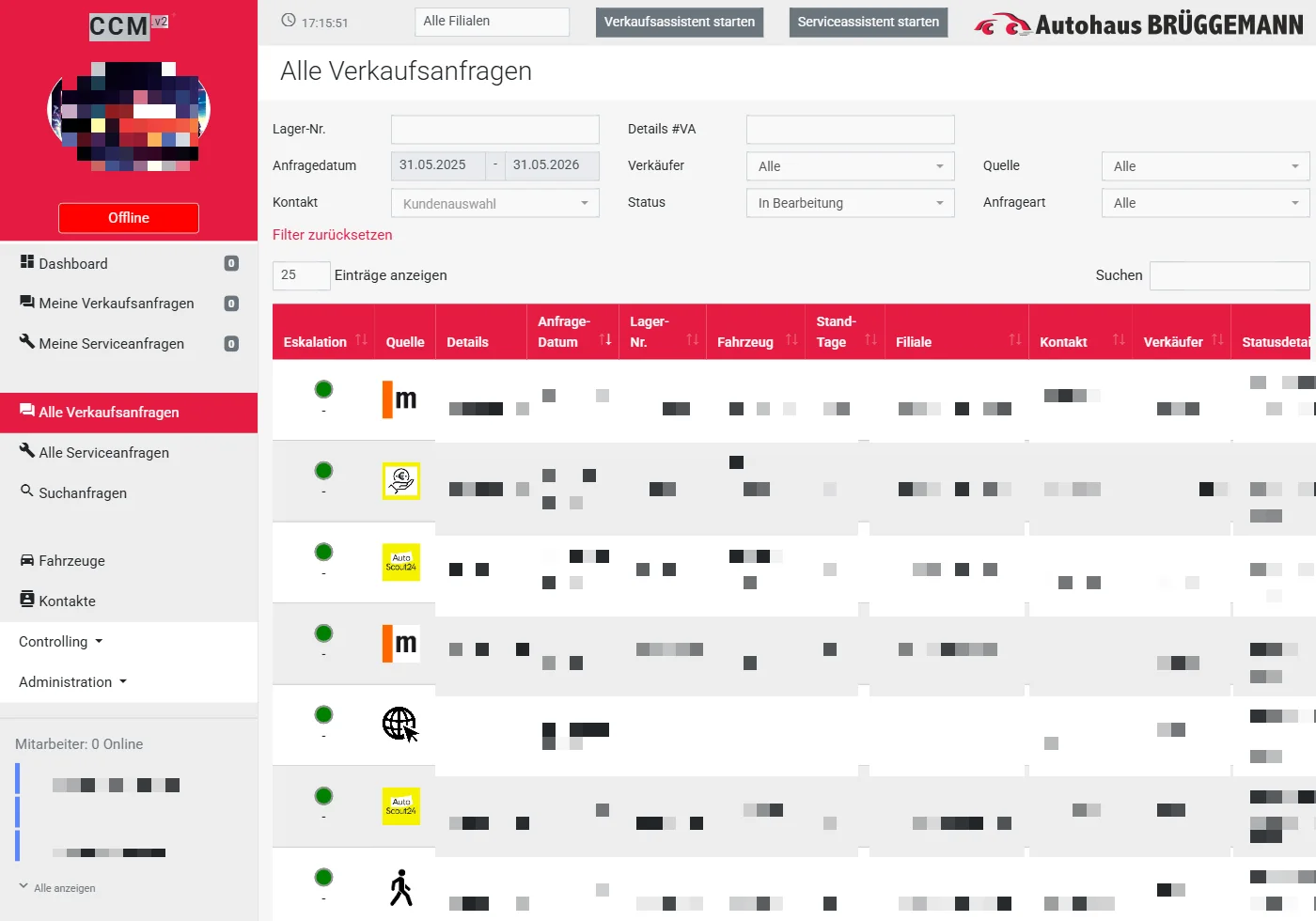
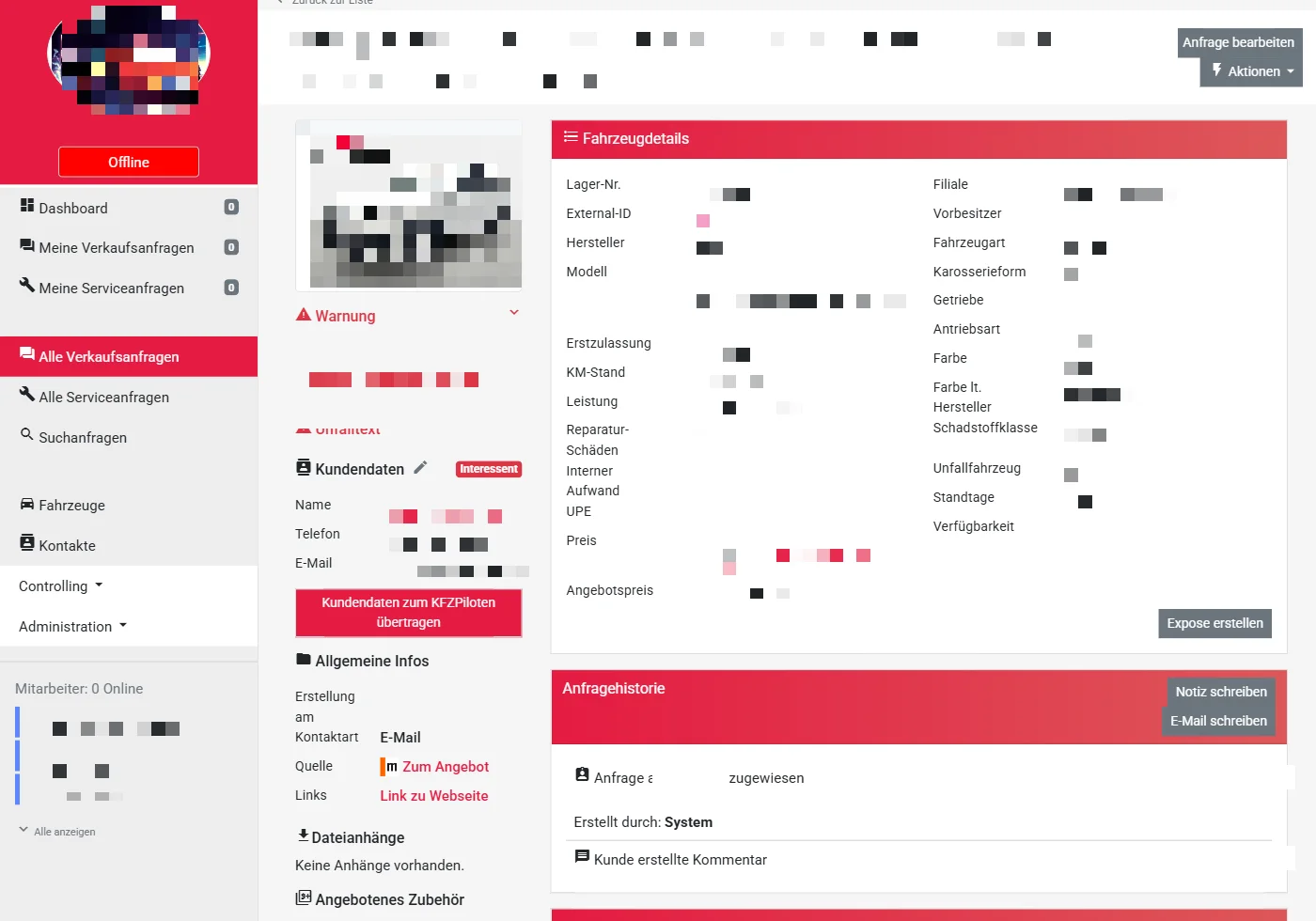
Not every company needs a full CRM. For the stretch from first enquiry to signed order we built CCM2, our own lean lead management system — shaped by practice in the vehicle trade, where enquiries from several sources have to reach the right person quickly and traceably.
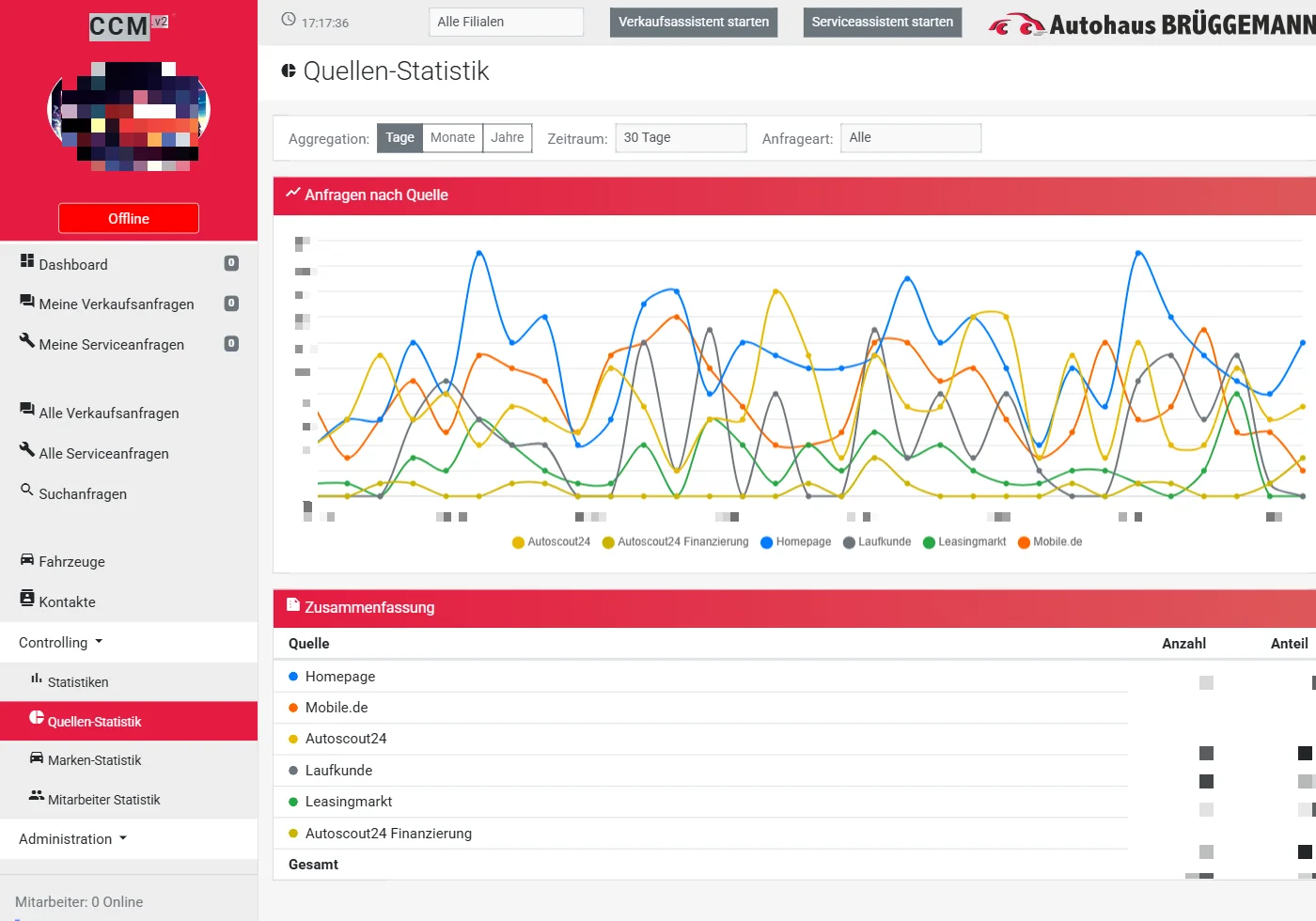
CCM2 collects enquiries from website forms, portals and email in one place, assigns them to owners and records the processing state — from first contact through follow-ups to closing. Reports show which sources bring enquiries and where they get stuck. It connects to what is already there: website, shop, existing systems.
Whether CCM2 fits or a standard CRM is the better choice is settled in the requirements workshop — our recommendation stays vendor-neutral even when our own product is not the right answer. The Autohaus Brüggemann case shows CCM2 at work.
Data migration and the GDPR
Most CRM projects begin with Excel lists, Outlook contacts and a legacy system nobody wants to touch any more. We clean up before the import: merge duplicates, standardise formats, sort out dead records. A test import shows what arrives — only then do we migrate for real.
In a CRM the GDPR is not a checkbox but process work: documented consent, a deletion policy that includes the connected systems, access rights by role. We implement those processes technically; the legal assessment stays with your data protection officer.