01 Starting point
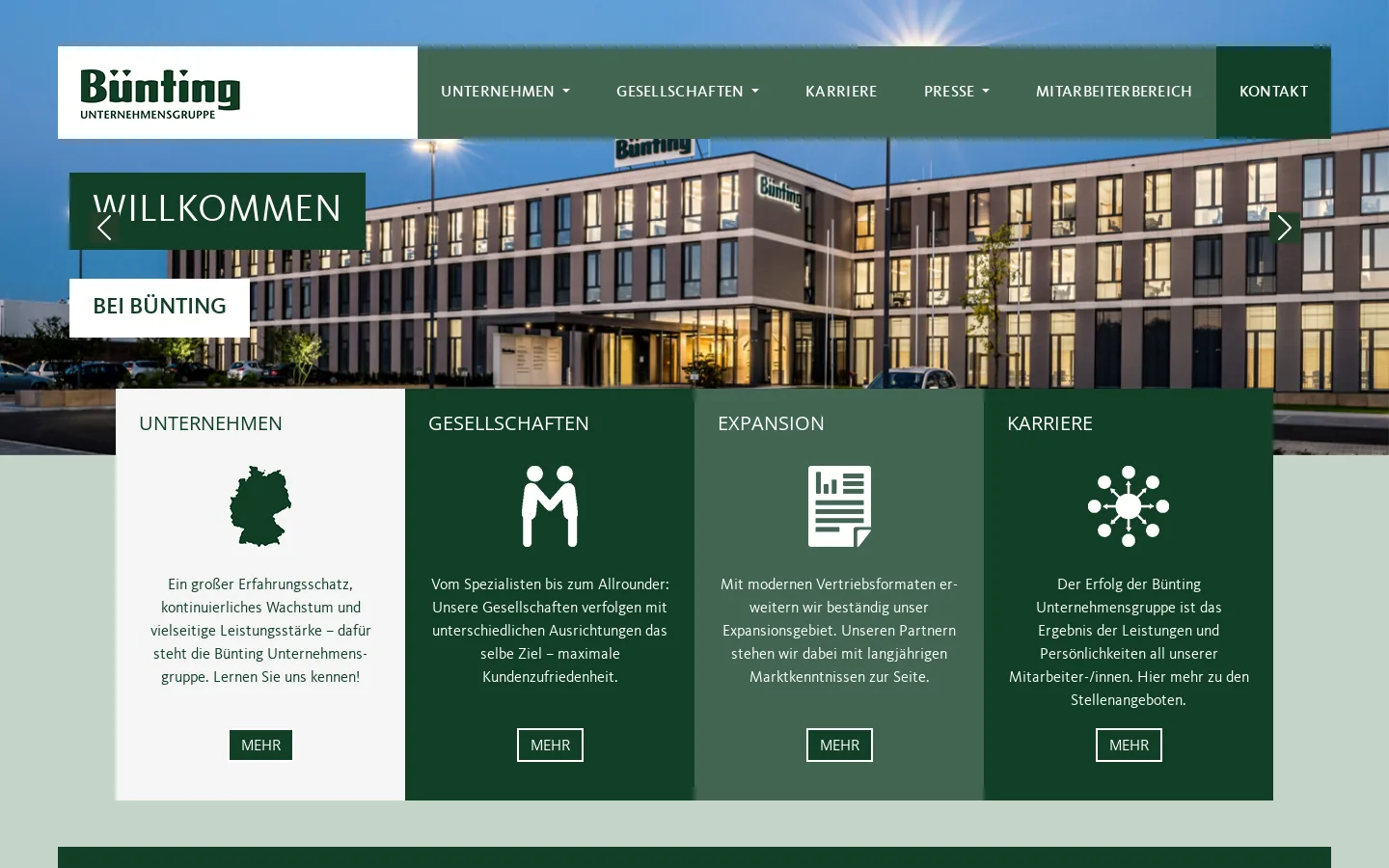
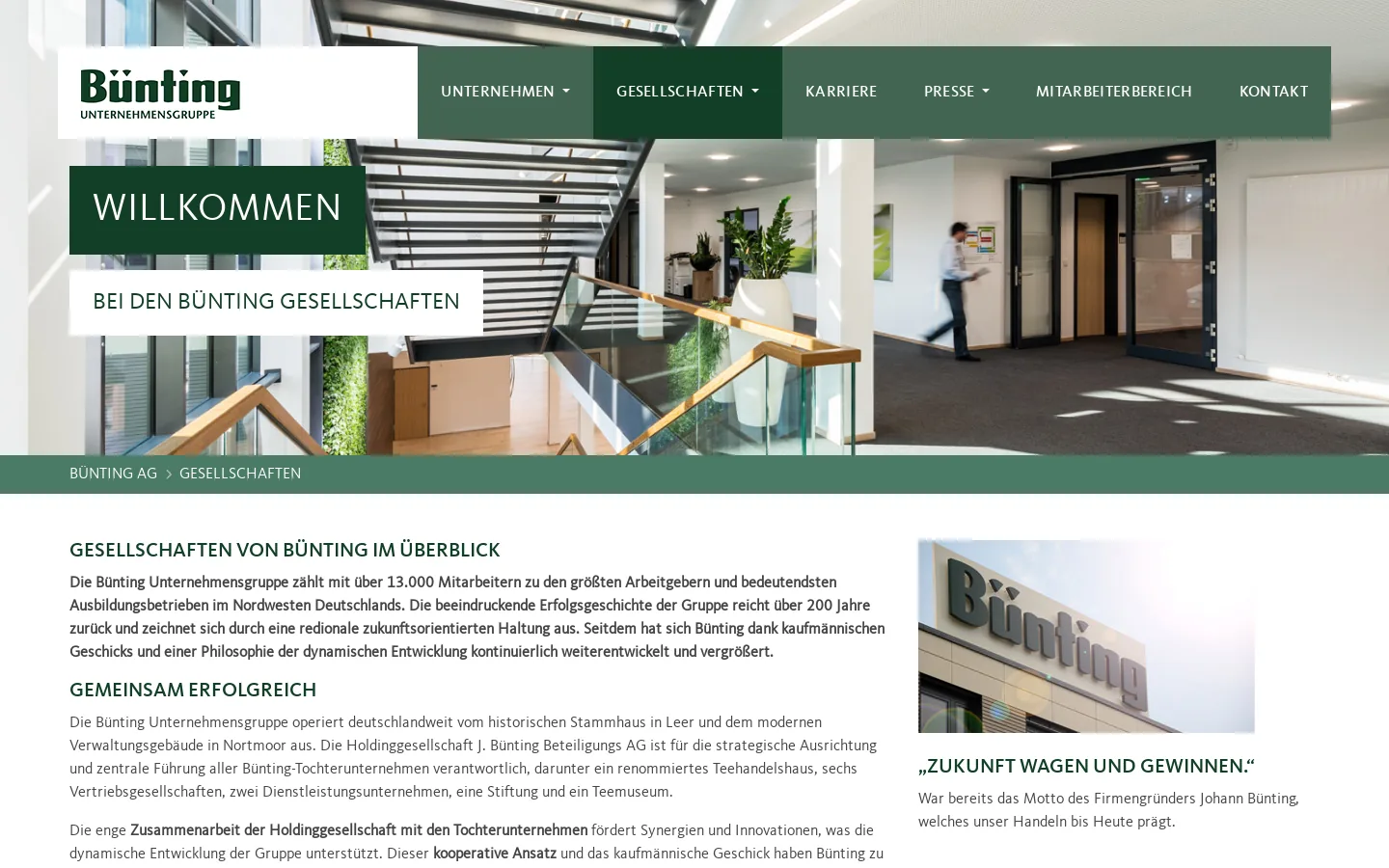
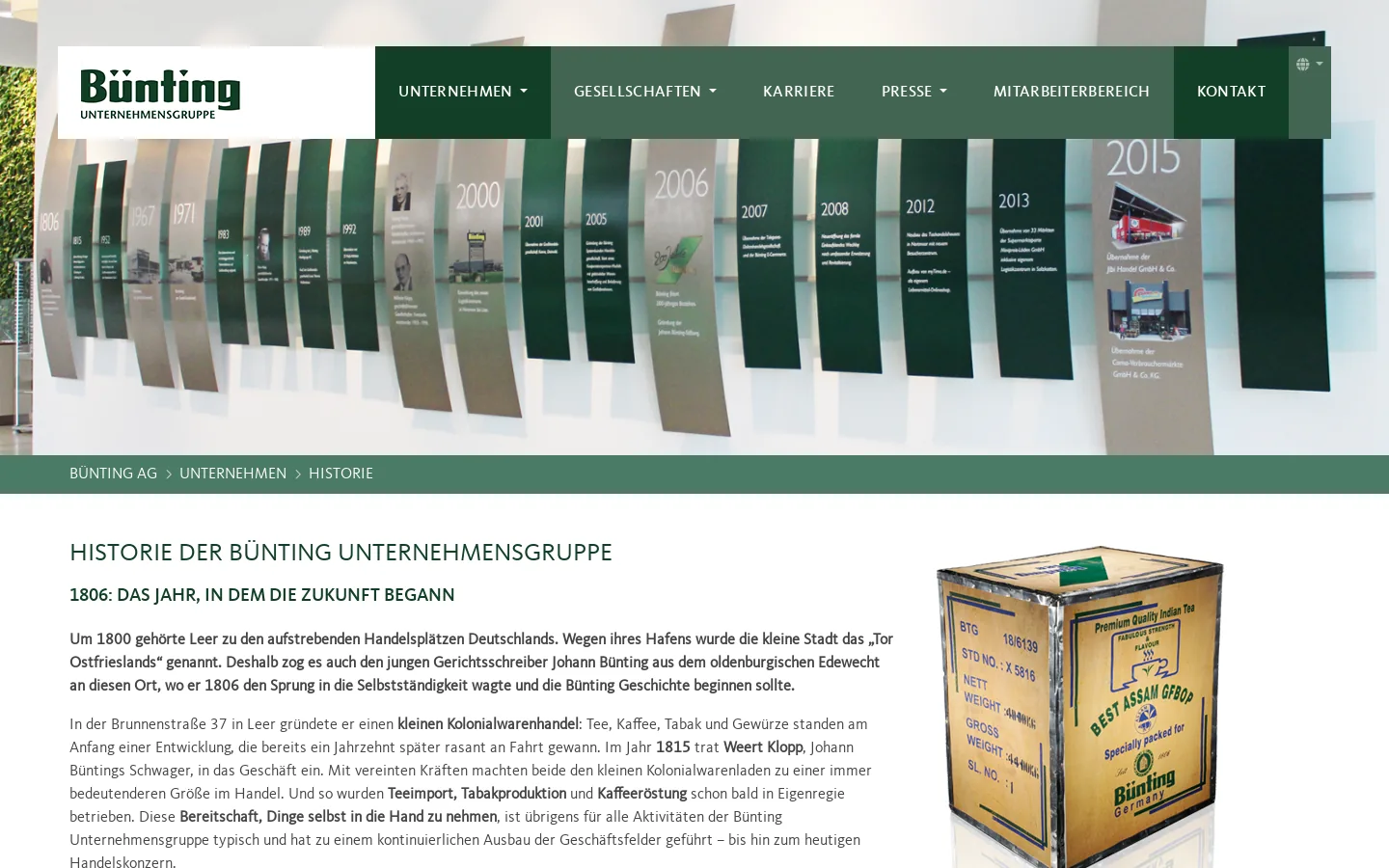
J. Bünting Beteiligungs AG, based in Leer in East Frisia, traces its history back to 1806. The group includes famila, Combi, the tea trading house J. Bünting and myTime.de, along with the Markant Nordwest cooperation of independent retailers. The group website buenting.de brings together company profile, subsidiaries, press, careers and contact. TYPO3 runs the editing side, and the front end is based on a Bootstrap template.
The German Accessibility Improvement Act (BFSG) has applied since 28 June 2025. It covers services through which consumers enter into contracts — a purely informational group website is not necessarily caught by it. Bünting decided to reach that level anyway. The benchmark is EN 301 549, which for websites points to WCAG conformance level AA. The work happened in the running system, on template, output and operation, without a relaunch and without a break in editorial routine.
02 Solution
First an inventory along the WCAG criteria: go through the page types, check structure and heading hierarchy, measure contrast values, operate forms and search from the keyboard, listen to the output in a screen reader. The findings became a list, sorted by effort and effect. Much of it concerned not individual pages but the templates behind them — a correction there takes effect on every page at once.
The rework happened in the Fluid template and in the CSS, not through an overlay script. Skip links to navigation and content sit as the first focusable elements in the source and become visible when tabbing. Landmarks such as header, nav and main structure the page, images carry alternative text, and the search field and form elements were given meaningful labels. The contrast and text-size switches are a separate TYPO3 extension and stay reachable on every page.
Testing ran in three passes: automated against the WCAG criteria, manually with keyboard and screen reader, and with an eye on everyday editing. The last point counts most — accessible templates are little help if the next article skips heading levels or leaves alternative text empty. Alternative text and structure have to arise where content is created, not in a later correction.
03 Result
The site can be operated entirely from the keyboard. Two skip links lead straight to navigation and content, one switch changes to a high-contrast display, a second enlarges the type. Both stay visible while scrolling. Images have alternative text, headings follow a hierarchy, and the search field and forms are labelled and therefore readable by a screen reader.
The changes sit in the template, not in individual pages. New content inherits that state without anyone reworking it, and that carries through the next round of expansion as well. Operation continues on TYPO3 and the editorial team works in the familiar forms. Accessibility is therefore not a project state with an expiry date but a property of the system that comes along with every publication.